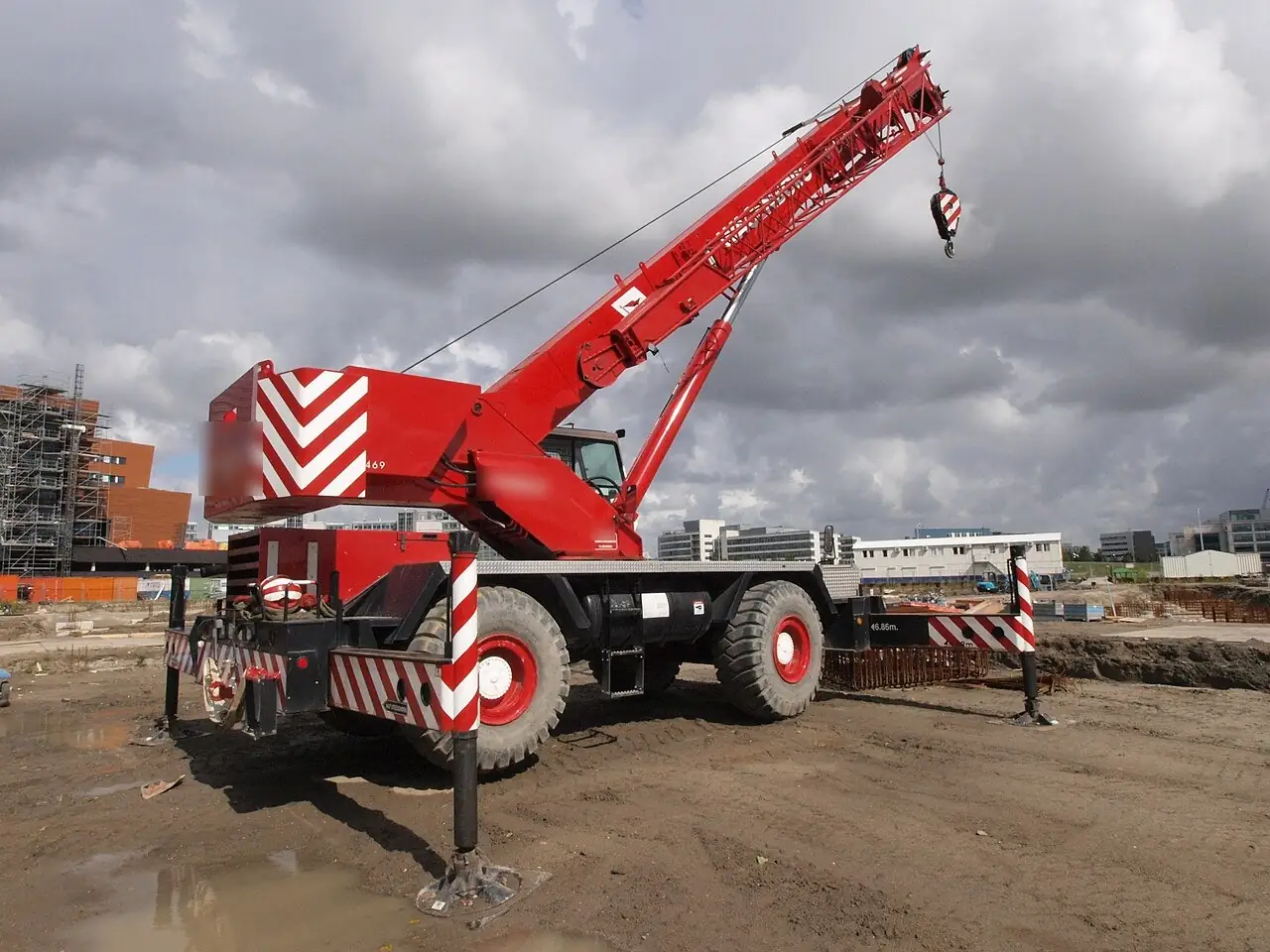
Mobile Truck Crane & Boom Truck Rental in Victoria
Hydraulic truck cranes, all-terrain cranes and boom trucks—operated and ready to drive to your Victoria job site.
Hydraulic truck cranes and boom trucks handle most everyday lifts in Victoria: rooftop HVAC and signs, trusses and precast on new commercial buildings, and unloading equipment at shops and warehouses along US 59 and Loop 463.
Hydraulic truck cranes, all-terrain cranes and boom trucks
Mobile cranes are the most common rentals because they drive to the site, set up in minutes and leave the same day. There are three main types:
Boom trucks (knuckle and straight boom)
A crane mounted on a commercial truck chassis, often with a flatbed. Boom trucks can haul material and lift it in one trip. Typical uses: HVAC rooftop units, signs and billboards, trusses, steel joists, generators, transformers and storage containers.
Hydraulic truck cranes
A dedicated telescopic crane on a truck carrier. More capacity and reach than a boom truck while still road-legal for most moves. Great for precast, rooftop equipment, light steel and general construction picks.
All-terrain cranes
Multi-axle telescopic cranes that travel at highway speeds and can handle rough site conditions better than truck cranes. Used for heavy picks with long reach, plant work, telecom and wind components. Larger units need extra trucks for counterweight.
| Crane class | Typical capacity range* | Good for |
|---|---|---|
| Boom truck / knuckle boom | ~10–60 tons | HVAC units, signs, trusses, building materials, light equipment |
| Hydraulic truck crane | ~30–120 tons | Quick set-ups, precast, rooftop equipment, general construction |
| All-terrain crane | ~40–500+ tons | Heavy picks with long reach, wind and plant work, highway travel to site |
| Rough terrain crane | ~30–165 tons | Unpaved sites, oil field, new subdivisions, long stays on one site |
| Crawler crane | ~50–600+ tons (larger exist) | Bridges, heavy steel, pile driving, long-duration projects |
| Tower crane | Varies by jib length | Multi-story buildings and tight urban sites over months |
| Carry deck / pick-and-carry | ~4–30 tons | Inside plants and warehouses, tight spaces, moving loads short distances |
*Ranges are typical, not limits. The real capacity of any crane depends on radius, boom length, configuration, counterweight and ground conditions—always check the manufacturer's load chart.
How to choose crane tonnage
A crane's advertised tonnage is its maximum capacity at a very short radius. At real working distances the capacity drops quickly—a "100-ton" crane may only lift a fraction of that at 60 or 80 feet. To size a crane:
- Add up the total load: the object plus hook block, slings, shackles and any spreader bar.
- Measure the radius: from the crane's center of rotation (where it can actually set up) to the center of the set point. Radius matters more than height.
- Check boom length and height: the boom must clear the building edge or obstacles and still reach the set point.
- Leave a safety margin: operators size so the lift stays comfortably inside the load chart; many treat anything above ~75% of chart as a critical lift.
- Account for the ground: soft soil, slopes or buried utilities may push you to a different crane, mats or a different setup spot.
Not sure? Send us the weight, distance and photos—the operator will run the numbers against their load charts before quoting.
Typical uses in Victoria
- HVAC & rooftop units
- Signs & billboards
- Trusses & joists
- Precast & septic tanks
- Generators & transformers
- Container & equipment unloading
Permits & lift-planning basics
- Qualified people: Federal OSHA rules for construction cranes (29 CFR 1926 Subpart CC) require certified or qualified operators, qualified riggers and signal persons, and adequate ground conditions. Ask the operator for current certifications and a certificate of insurance before work starts.
- Power lines: OSHA generally requires keeping cranes at least 20 feet from power lines up to 350 kV unless the utility de-energizes the line or a specific clearance plan is in place. Call the utility early if lines are close.
- Ground and outriggers: Outrigger loads can be very high. Know where underground tanks, vaults, septic systems and utilities are; operators use crane mats or pads to spread the load.
- Moving the crane: Large cranes and their counterweights often travel under Texas oversize/overweight permits (TxDMV), which affects routing and timing.
- Streets and right-of-way: Setting up on a public street or sidewalk usually needs a permit or approval from the city or county—check with Victoria or Victoria County before the lift date.
- Airspace: Cranes taller than 200 feet, or near a public-use airport such as Victoria Regional Airport (VCT), may need an FAA Form 7460-1 notice filed at least 45 days before the crane goes up.
- Critical lifts: Many contractors require a written lift plan for picks above roughly 75% of chart capacity, tandem lifts, lifts over occupied areas or personnel lifts.
Request a free quote
Tell us about your lift anywhere in Victoria & the Crossroads. We'll connect you with a vetted local crane operator who will send a written quote.
- Free, no-obligation quotes
- Operated rentals—hourly, daily or monthly
- Hablamos español